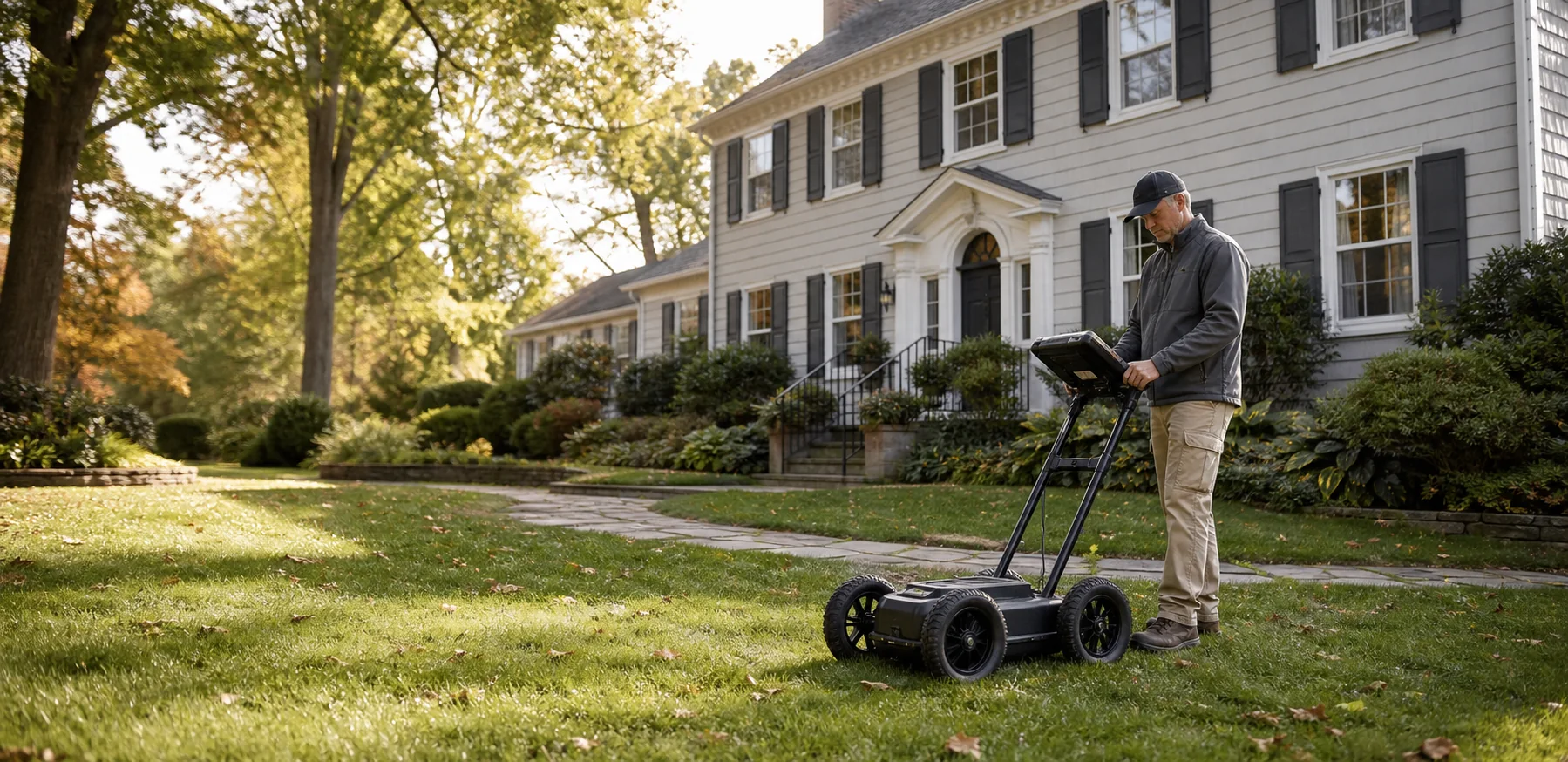
When a tank sweep is worth scheduling
Order a sweep when a house has an unclear heating history, a lender or attorney has raised the issue, or an older property has switched from oil to gas. In Essex County, buyers often use a sweep to avoid discovering a buried tank after inspection contingencies have expired.
What a useful report should explain
The result should say what parts of the property were inspected, which equipment was used, whether access limitations affected the search and what evidence was or was not found. A clean report is most helpful when it is specific enough to keep with the property file.
What a residential oil tank sweep is designed to answer
A residential oil tank sweep is a focused investigation for one question: is there evidence that a heating-oil tank may be buried on this property? It is most useful when a house has an older heating history, the current owner cannot produce removal paperwork, or a buyer wants a clearer answer before a contingency expires. The work is different from a standard home inspection. A home inspector may notice a fill pipe, an old boiler connection, or a patch in the yard; a dedicated sweep is intended to investigate those clues systematically. The resulting report should identify the address, the date, the areas examined, the equipment or method used, and any limits on access. It should also distinguish between a clear scan and a conclusion that no tank can possibly exist. Mature trees, patios, additions, parked vehicles, dense utilities, and inaccessible portions of a property can all affect what can be evaluated. That nuance matters because a useful report gives a homeowner an honest next step rather than false certainty.
When to schedule a sweep in Essex County
The best time to ask about a possible buried tank is before another project makes the question expensive. Buyers often schedule a sweep soon after an accepted offer when an older home has converted from oil to gas. Sellers can use one before listing, especially if the property file contains no clear removal record. Homeowners also use a sweep before replacing a driveway, adding a patio, building an addition, installing a pool, or undertaking major landscaping. In each case, a small amount of due diligence can prevent excavation from becoming an unplanned discovery. Current gas service is not proof that oil was never used; many Essex County homes have changed heating systems over several decades. Useful clues include capped or cut piping, an old exterior fill or vent location, fuel-delivery records, a former boiler room, or unexplained changes in paving. None of those clues alone confirms a tank. Together, they are a sensible reason to investigate before deadlines or construction work narrow the options.
How to use the result after the search
A clear sweep report should be kept with the property records, not discarded after closing. It can answer the same question for a future buyer, lender, insurer, or contractor. If the report identifies evidence of a tank, the next step is usually a site-specific discussion about location, access, and the appropriate scope of work. That may involve removal planning, an inspection of a known visible tank, or a more limited review of records; it should not automatically be treated as a remediation project. Ask the provider to explain what was actually observed, whether a tank location has been identified, what follow-up is recommended, and which decisions need a permit or municipal confirmation. In a transaction, share the report with the appropriate agent and attorney rather than relying on a verbal summary. A factual record reduces speculation and allows the parties to decide whether more investigation is needed. For homeowners, the same disciplined approach makes it easier to coordinate a tank question with landscaping, paving, or heating work.
Common questions
Can a home inspector perform a tank sweep?
Some inspectors flag clues, but dedicated tank-search providers use specialized equipment and issue a report focused on buried tank evidence.
Do I need a sweep if the home uses natural gas?
Often yes when the property is older or has an unknown heating history. A conversion to gas does not prove an older tank was removed.